/ IRON ROCK CONCRETE
DRIVEWAY REPLACEMENT
Driveway Replacement in the Rogue Valley
Iron Rock Concrete handles driveway replacement in the Rogue Valley for homeowners and rural property owners who need more than a surface refresh. The work includes removing the existing driveway, preparing the site, and replacing it with new concrete under an agreed project scope.
A driveway should fit the way you enter, park, turn, and reach the house. Before discussing a replacement, we want to understand the current surface, the property layout, and the problems you want to address.
Discuss Your Driveway or call 541-864-9465.
Licensed • Bonded • Insured • Oregon CCB #235541
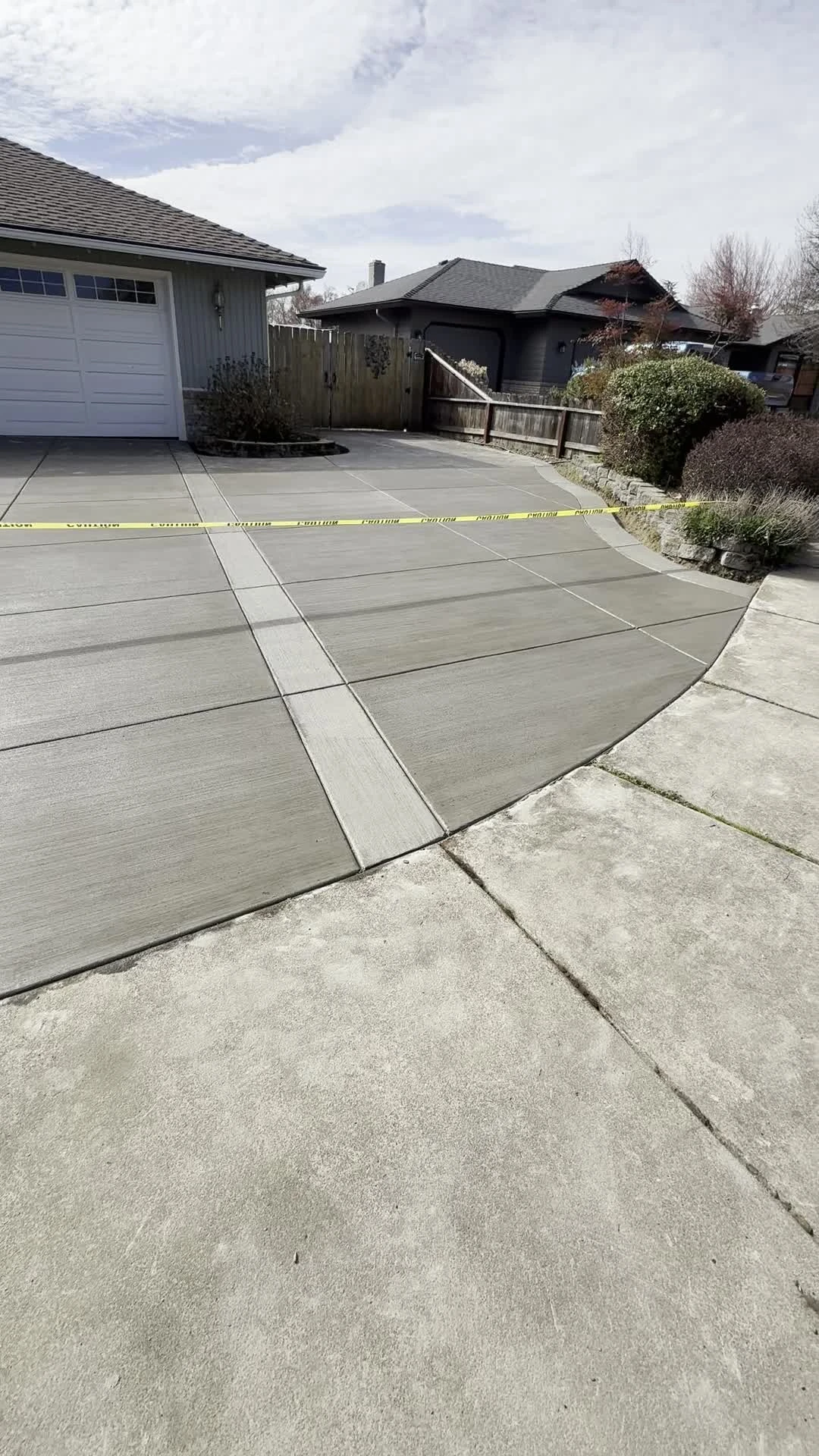
IRON ROCK / REAL PROJECT WORK
Purpose, access and site conditions
shape the starting point.
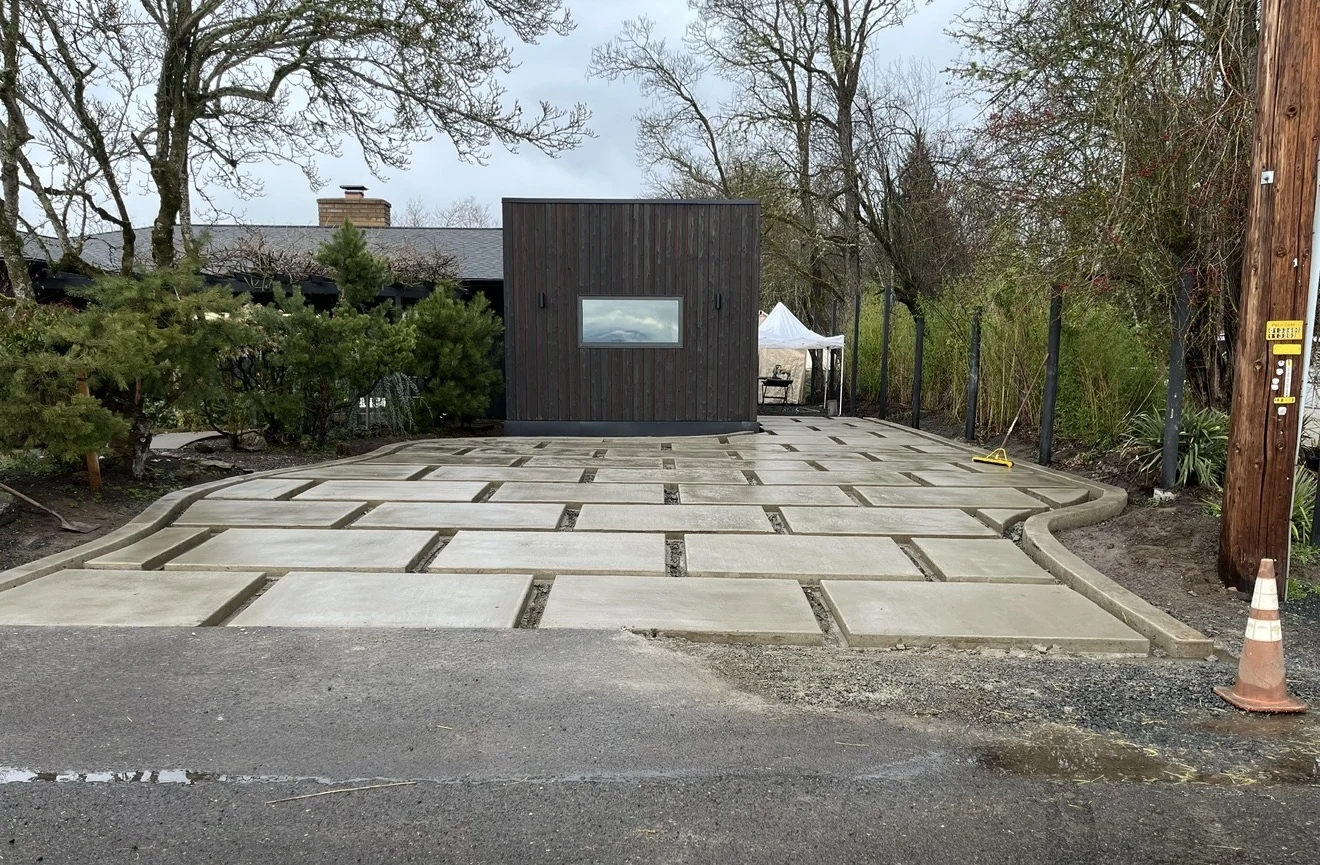
01 / THE PROPERTY COMES FIRST
REAL WORK / PROPERTY-SPECIFIC PLANNING
When the Existing Driveway Deserves a Closer Look
Widespread cracking, uneven panels, deteriorating surfaces, and recurring trouble spots are reasons to evaluate the whole driveway. They do not all point to the same cause. What looks like a surface problem may involve the support below it, nearby drainage, roots, or the way old concrete meets surrounding surfaces.
Replacement removes the old concrete and creates an opportunity to review those conditions. It is not automatically the answer to every crack. Photographs help explain the concern, but the right scope depends on the property and what an evaluation reveals.
02 / PLAN FOR THE WAY YOU USE IT
Plan the New Driveway Around Daily Use
01
Consider which vehicles use the driveway, where they park, and whether turning or backing feels restricted. A household with several vehicles may have different needs from a long rural approach serving a shop and residence. Existing gates, garage doors, walkways, and roadside connections also affect the layout discussion.
02
Water movement matters too. Tell us where water collects, where it travels during rain, and whether it approaches the garage or entry. Changing the concrete surface alone may not resolve a larger drainage issue. We evaluate those observations alongside grades and adjoining surfaces before defining the work.
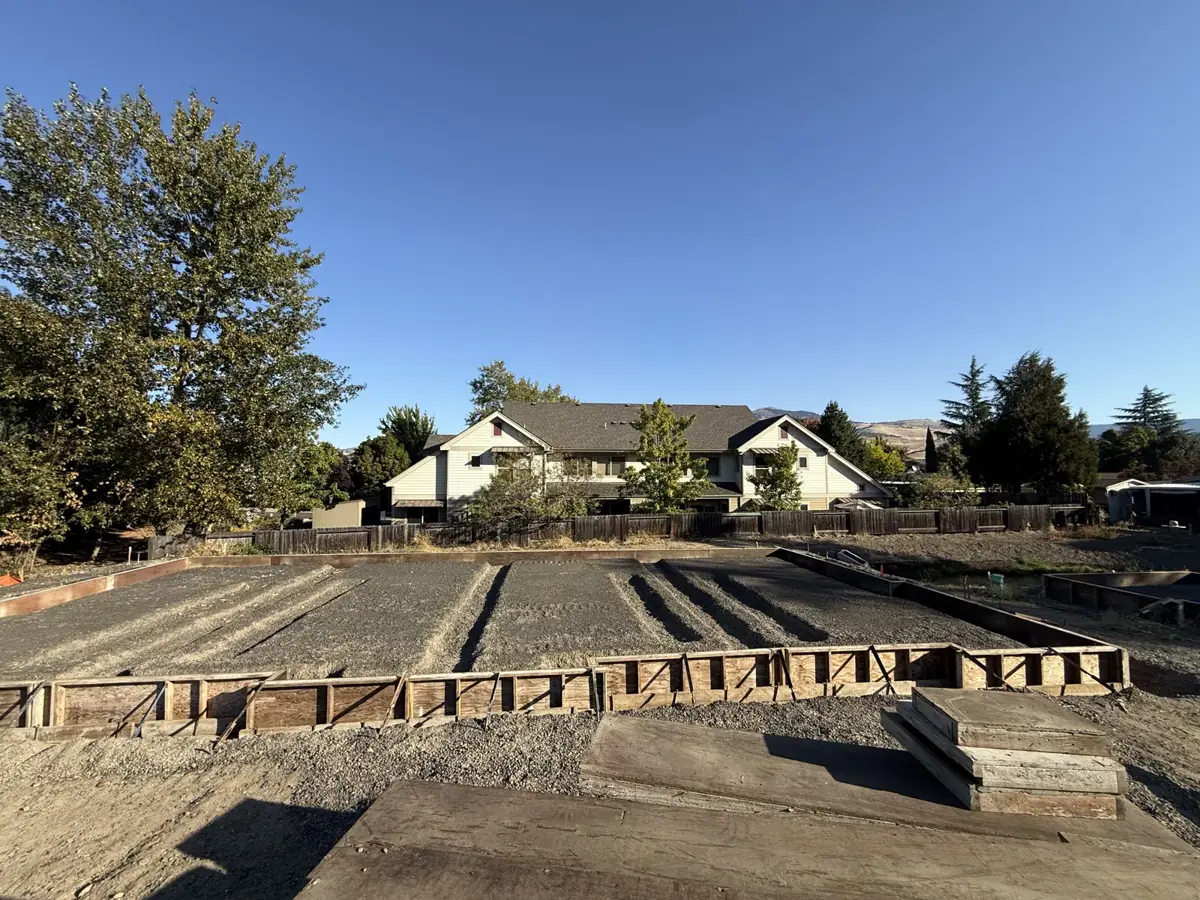
PROJECT PHOTOGRAPHY / IRON ROCK CONCRETE
03 / LOOK BEYOND THE SURFACE
Understand Removal, Preparation, and Connections
↗
The replacement conversation starts with the area to be removed and how equipment can reach it. Landscaping, fences, utilities, nearby structures, and access routes may affect that scope. If other household members or buildings rely on the same approach, identify those needs early.
↗
After removal, the condition of the underlying area helps inform preparation requirements. Layout, transitions, joint planning, finish, and concrete requirements need to suit the intended use and project conditions. There is no single online specification that fits every driveway.
04 / CONNECT THE WHOLE PROPERTY
Larger Residential and Rural Driveways
Iron Rock’s residential priorities include substantial driveways and larger flatwork projects across Jackson County. Rural access can introduce questions that are easy to miss in a photograph: tight gates, overhead obstructions, approach grades, delivery routes, and space around outbuildings.
We serve Medford, Central Point, Eagle Point, and surrounding Rogue Valley communities. Mention any connected shop or parking-pad plans.
05 / THINK THROUGH THE NEXT STEP
Discuss Access and Care Before Work Begins
01
Driveway replacement affects how you reach the property. Discuss alternative parking, pedestrian access, deliveries, and any shared use while the scope is being developed. Do not assume every vehicle or entrance can remain available throughout the work.
02
New concrete also requires appropriate curing and protection. Weather, the concrete used, and intended vehicle loads influence return-to-use guidance. Follow project-specific instructions rather than judging readiness by a dry-looking surface. Joints help manage where shrinkage cracking occurs; they do not make concrete crack-proof.
THE NEXT STEP
Start with Your Existing Driveway
Contact Iron Rock Concrete with the location and a few clear photos. We can discuss what needs evaluation and the next steps for your replacement inquiry. For connected new construction, explore shop slabs and RV pads.
A LITTLE CLARITY BEFORE YOU START
Good questions.
Clear next steps.
Your property has its own conditions. These answers are a starting point—not a substitute for discussing your site.
01 / Does a cracked driveway always need replacement?
No. The extent of deterioration, movement, underlying conditions, and your goals all matter. Send photos and describe recurring problems so the driveway can be evaluated before a replacement scope is recommended.
02 / Can I change the driveway layout when replacing it?
A revised layout can be discussed. Gates, garages, grades, property constraints, and applicable requirements affect what is appropriate. Share the changes you want without assuming extra width or a new connection is automatically feasible.
03 / Will replacing the concrete fix standing water?
Not necessarily. Ponding can involve grades, runoff sources, adjoining surfaces, or drainage beyond the driveway. Describe when and where water collects so that issue is considered when evaluating the proposed work.
04 / When can I park on the new driveway?
Use the project-specific return-to-use instructions. Concrete needs time and suitable curing conditions to develop strength; vehicle weight and weather matter. The appearance of a finished surface is not permission to drive on it.
05 / What information helps you evaluate a replacement?
Send the location, rough dimensions, wide and close-up photos, vehicle types, access restrictions, and any drainage concerns. Mention gates, shared entrances, garage transitions, and other concrete areas you want considered.